The Parthenon

Democratizing the Place: A Self-Assembly Pavilion with Circular Tectonics
How can we reshape the democracy of the public space?
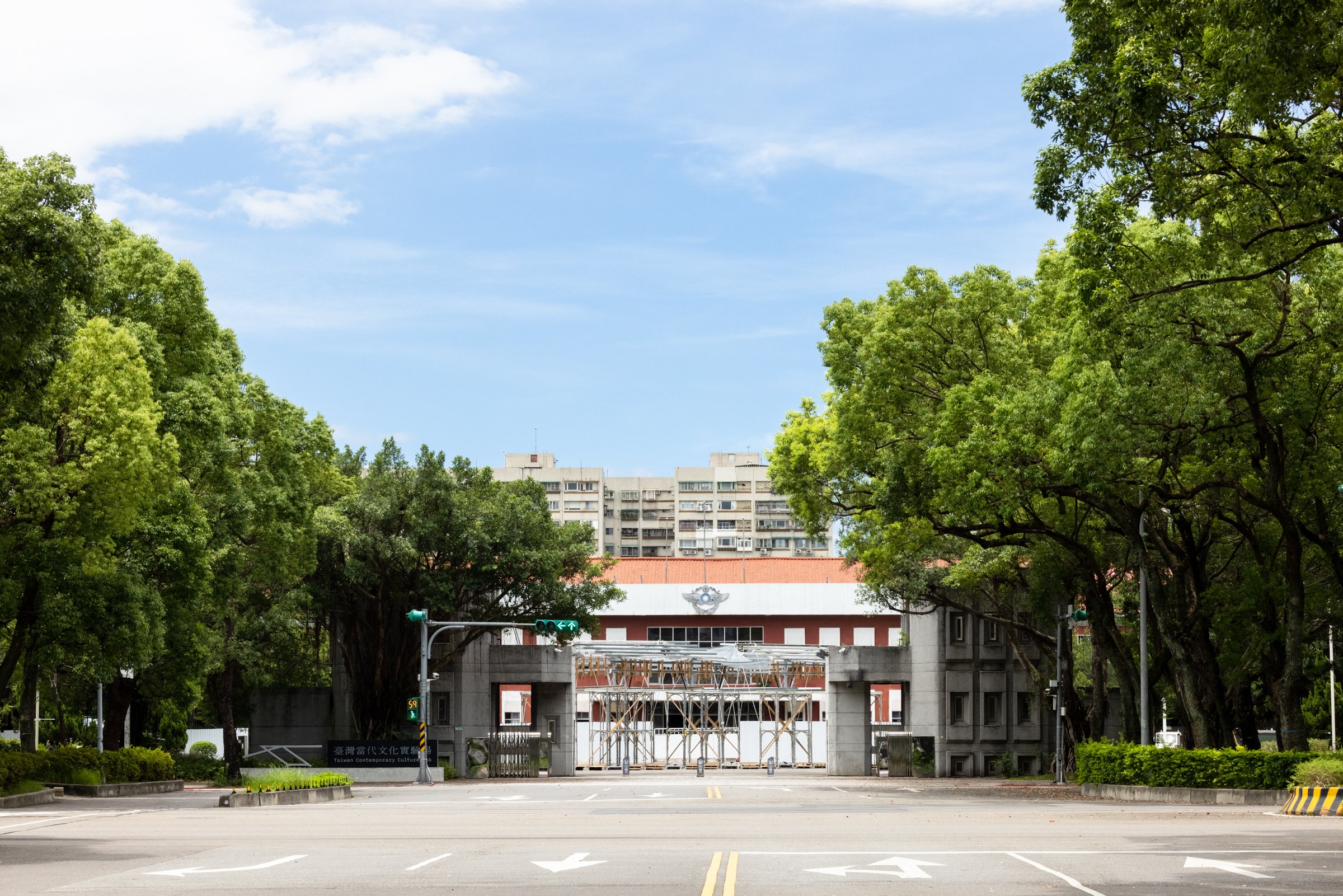
In 2023, we were invited to participate in the annual exhibition at the Taiwan Contemporary Culture Lab (C-LAB). Our objective was to design and build a multifunctional pavilion for a three-month duration, providing a sheltered venue for social advocacy and the performing arts.
Situated at the entrance of a former Air Force base, this installation explores the fluid nature of contemporary civic movements through its temporary presence. By utilizing industrial materials and standardized construction methods, we created a "public container" that is both evolving and precise. Its recyclable, open-ended design allows for seamless disassembly and reassembly, making it adaptable for any future civic site.
-
2023
-
Collaborative Exhibition
-
Taipei, Taiwan
-
Lead Artists: Xuan-Zhen Liao, I-Chieh Huang
Architectural Designers: Zhi-Ray Wang, Cheng-Yen Tsai, Chia-Hua Lee
Construction Collaboration: Tzu-Hsuan Yang, Tsung-Jen Hsu, Yi-Ling Chen, Hsin-Yi Lin, Chia-Wei Liang, Shang-Wei Teng, Chieh-Lin Yang, Chia-Chieh Han, Rama Saputra, Yu-Yen Cheng, Po-Hao Tseng, Po-Yen Kuo, Ying-Chieh Lin, Chung-Yueh Tsai, Shih-Ting Chen, Tzu-Mei Lee, Yu-Hsuan Lin, Yuan-Pei Hsiung, Wen-Hua Chang, Hung-Yuan Yang, Kuei-Chun Lin, Jo-Tzu Li, Pei-Yu Li, Hsu-Pin Lee, Chun-Tien Chen, Yu-Hsuan Tseng, Shih-Tung Lo, Shih-Wei Chen, Wei-Hsiang Lin, Wei-Hsuan Su, Wan-Jung Wu, Yung-Hsin Pai, Yueh-Ching Chen
Public Programs & Events: Yu-Yen Cheng, Wan-Jung Wu, Haibizi Big Band, Man-Shih, Goodbye Nao, Shang-Wei Teng, Vice City, Tzu-Mei Lee, Wei-Wang, Tile Shop Monologue, Lica
Photography: Chia-Wei Liang, Hsu-Pin Lee, Yi-Hsuan Chen, Chao-Yi Wei, Tse-Yu Lin, Chia-Chieh Han, Cheng-Ching Lin, Zhi-Ray Wang
Videography: Chun-Tien Chen, Yu-Hsuan Tseng, Yi-Hsiang Huang, Hsiao-Hua Chen, Ya-Chieh Chiang, Cheng-Ching Lin
Suppliers: Atelier-3, Dawen Construction
-
-
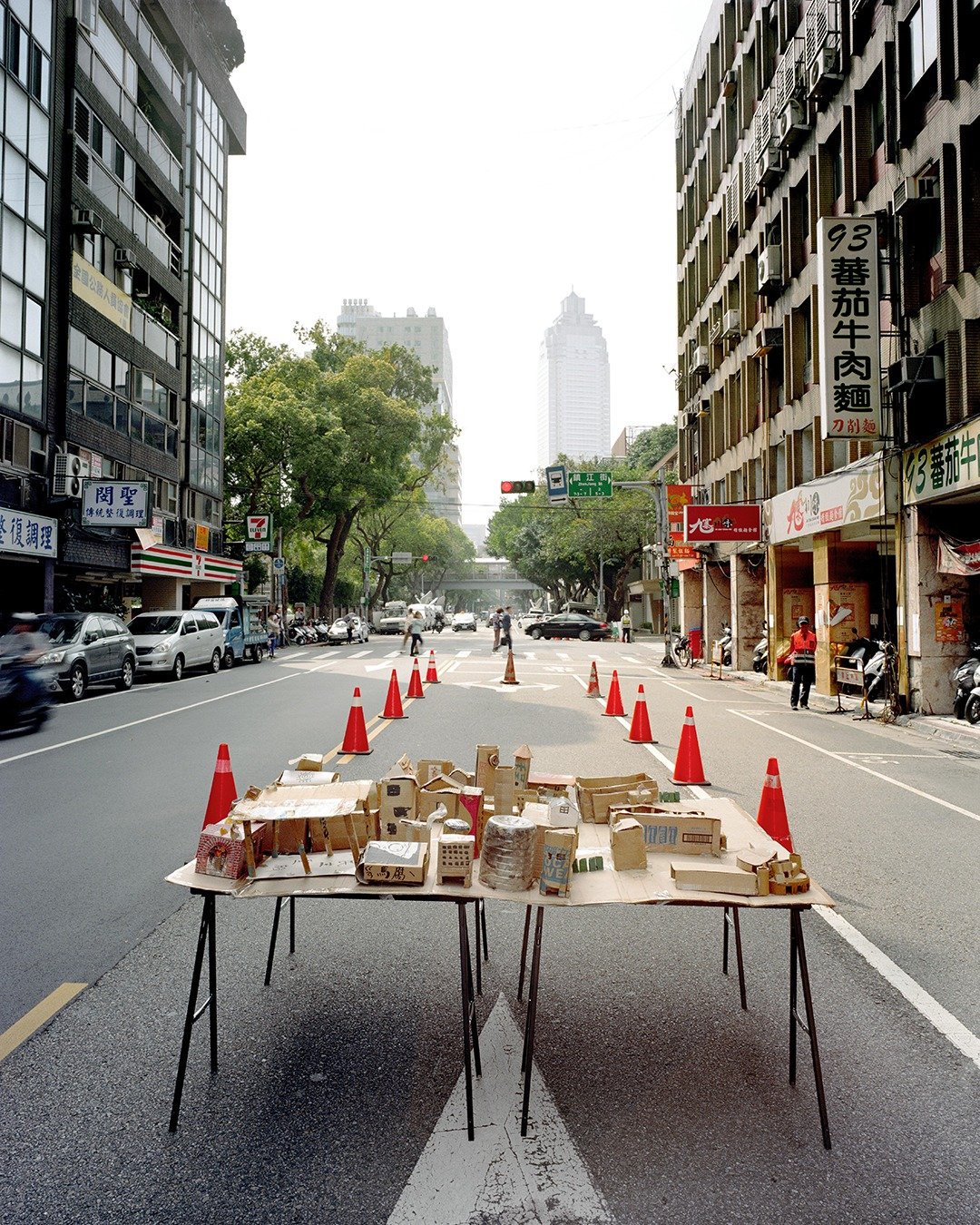
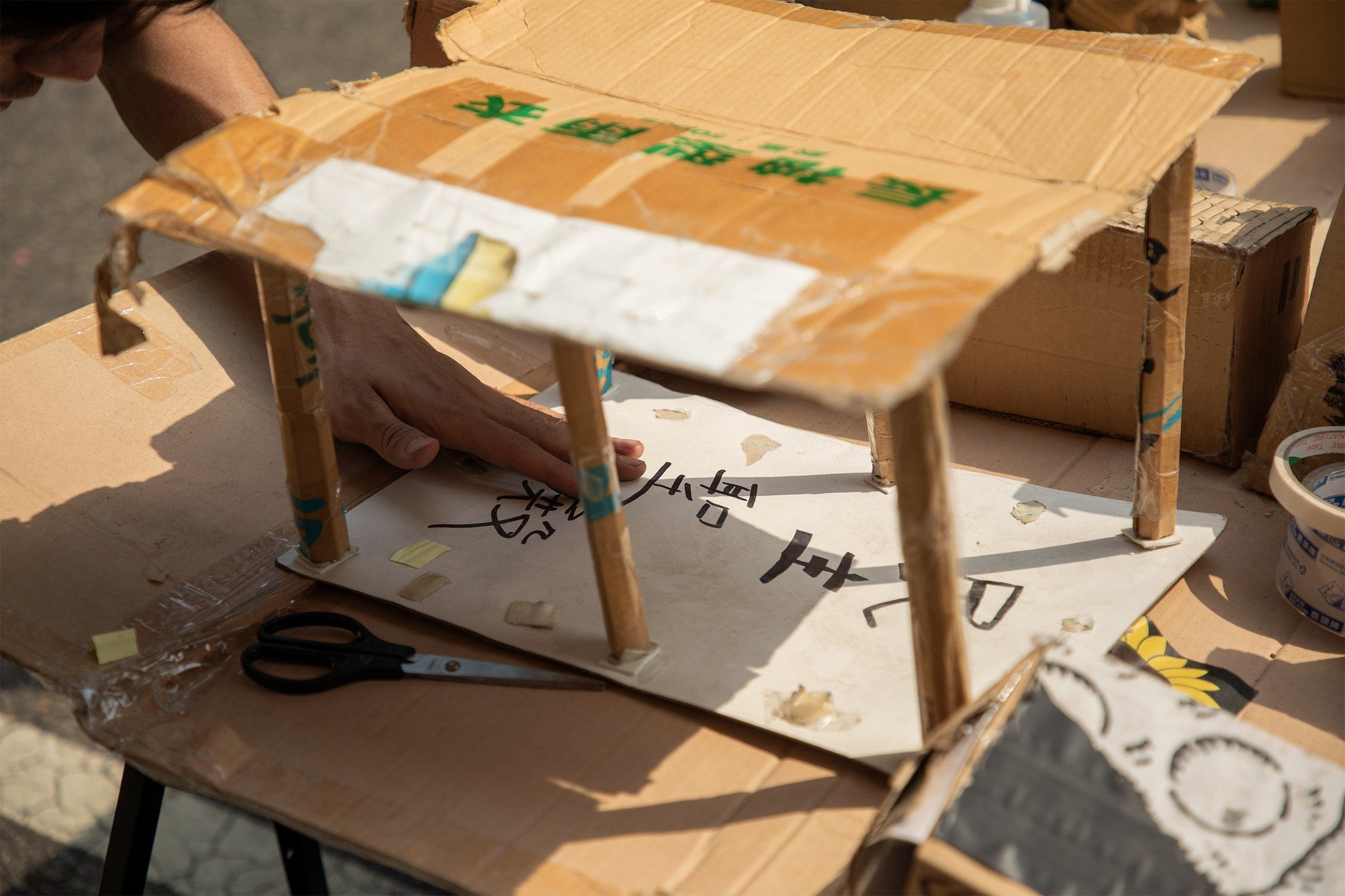
Paper Architecture, Liao Xuan-Zhen & Huang I-ChiehArchitecture of DemocracyThe Parthenon, an architectural installation that allows the audience to enter and explore, can be seen as a continuation of “Paper Architecture”—a cardboard architectural model created collaboratively by the artists and protesters at the site of the Sunflower Movement in 2014.
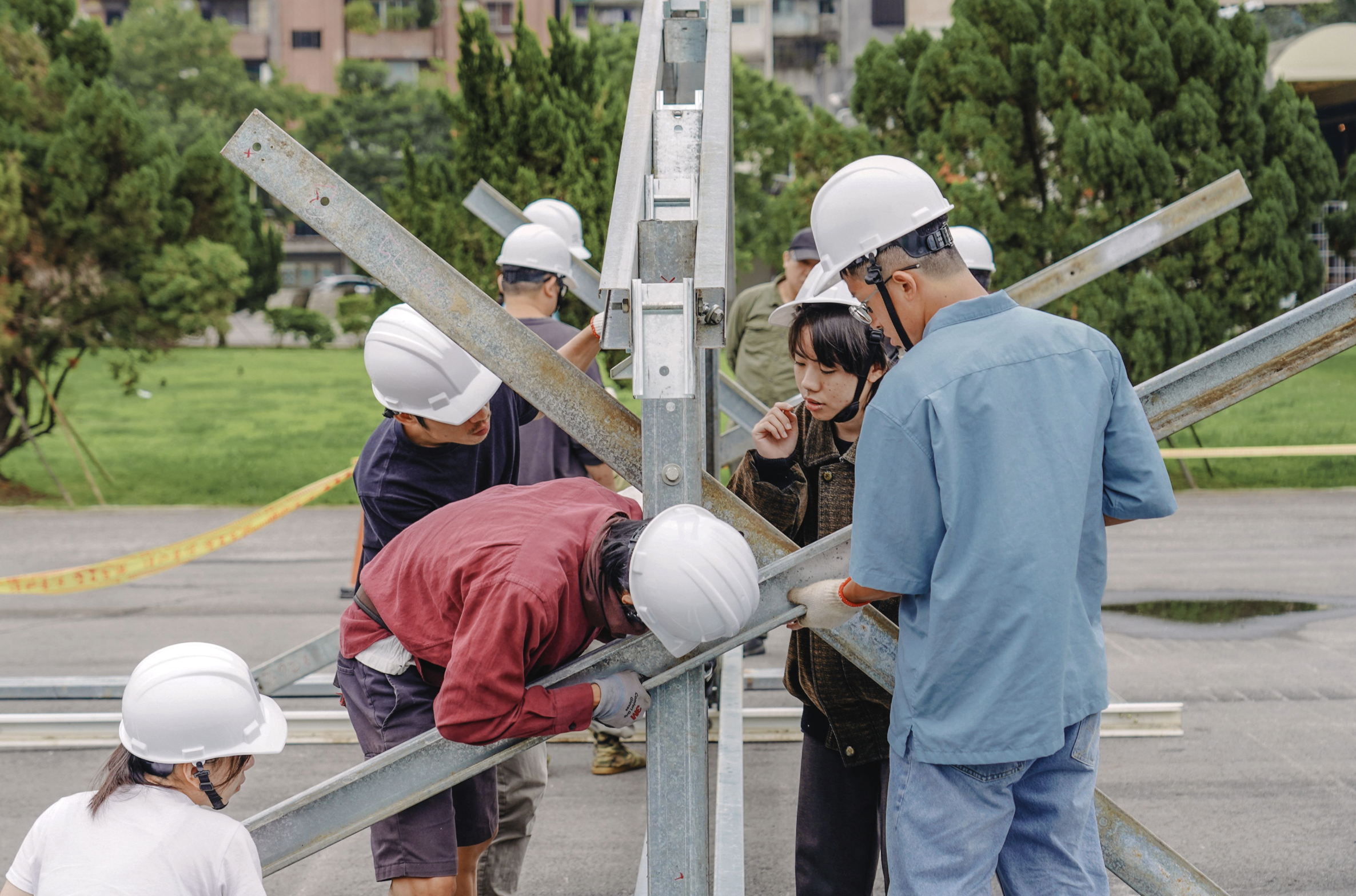
Building from the bottom-upMore than just a pavilion, this bottom-up assembly was co-constructed side by side by architects, artists, and those who once stood at the heart of the Sunflower Movement.


Circular Design and Participatory Assembly
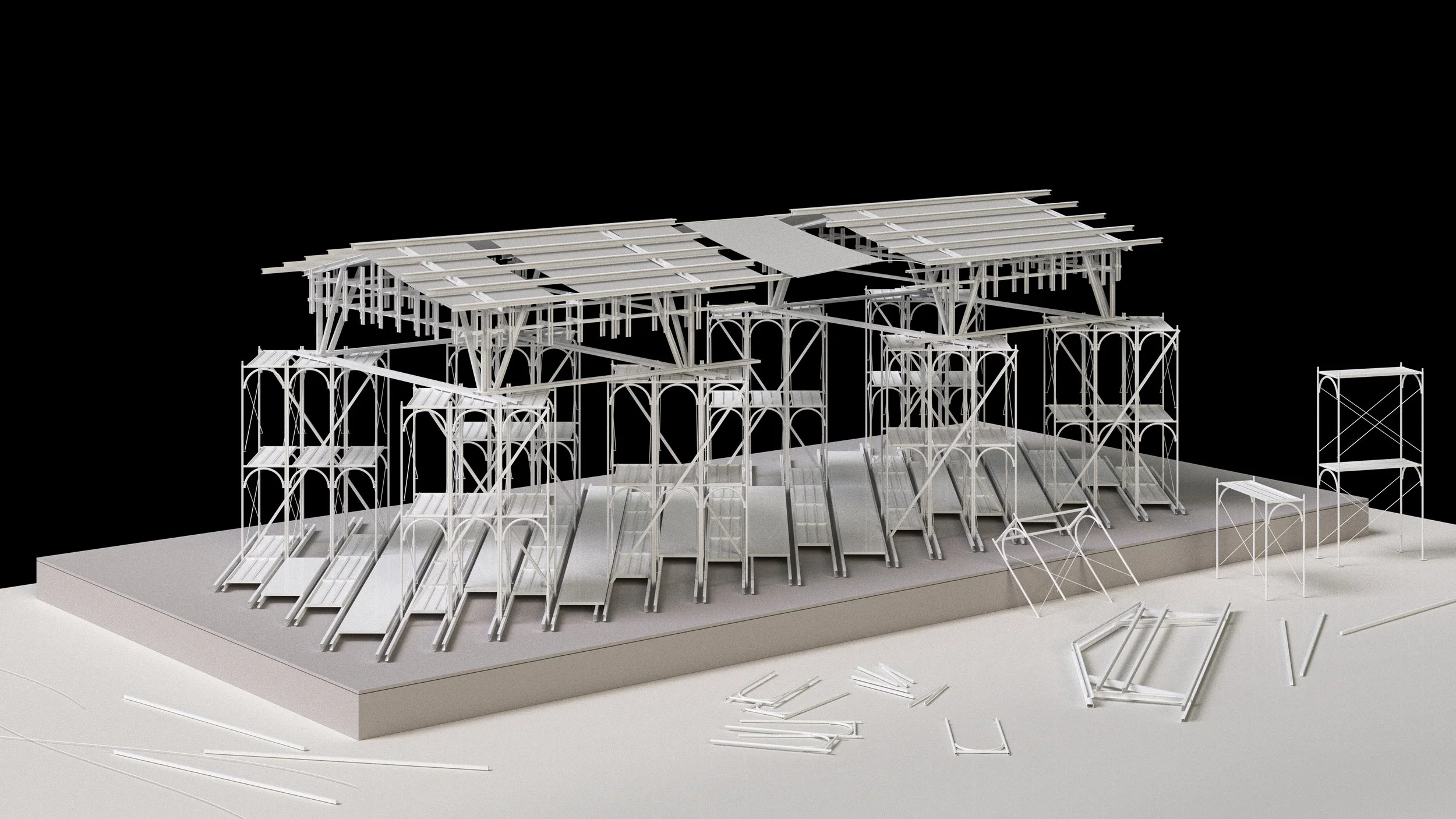
Our approach eliminates construction hierarchies by employing a modular, lightweight framework that invites public participation. This cooperative assembly method transforms voluntary partners into active space producers. By contributing labor to the physical structure, participants gain agency in the planning and execution of future site activities, creating a sustainable cycle of spatial production.


Open-Joint Systems and Material Circularity
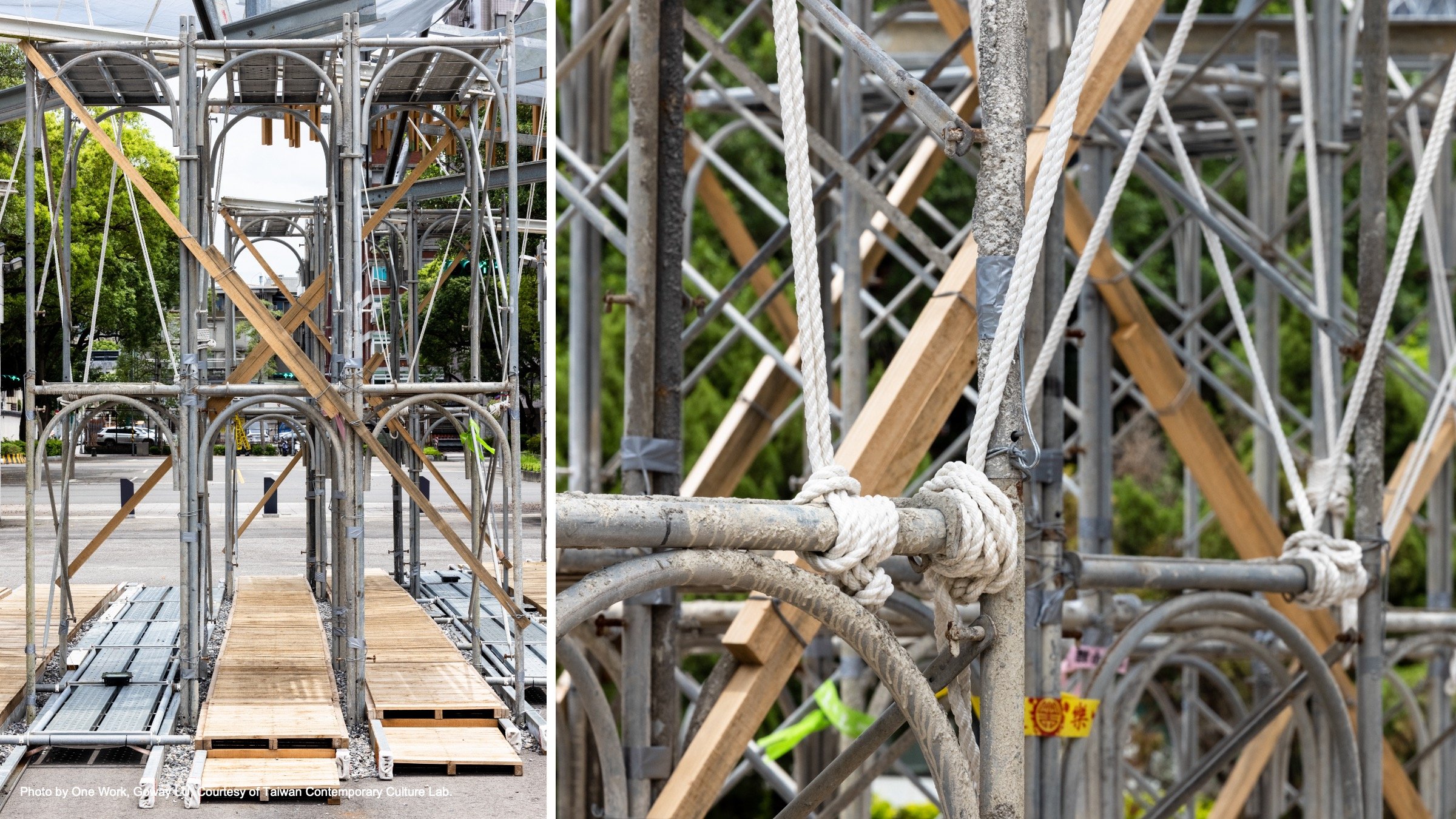
The primary structure is composed of industrial materials ubiquitous to Taiwan—lightweight steel, scaffolding, and reclaimed timber. Utilizing an open-joint structural system, every component is secured with traceable, reusable bolts and knots rather than permanent welds. This strategy ensured a high degree of circularity; upon the exhibition's conclusion, over 90% of the materials were successfully disassembled and diverted for future reuse.



A Space for Sharing and Building Connections
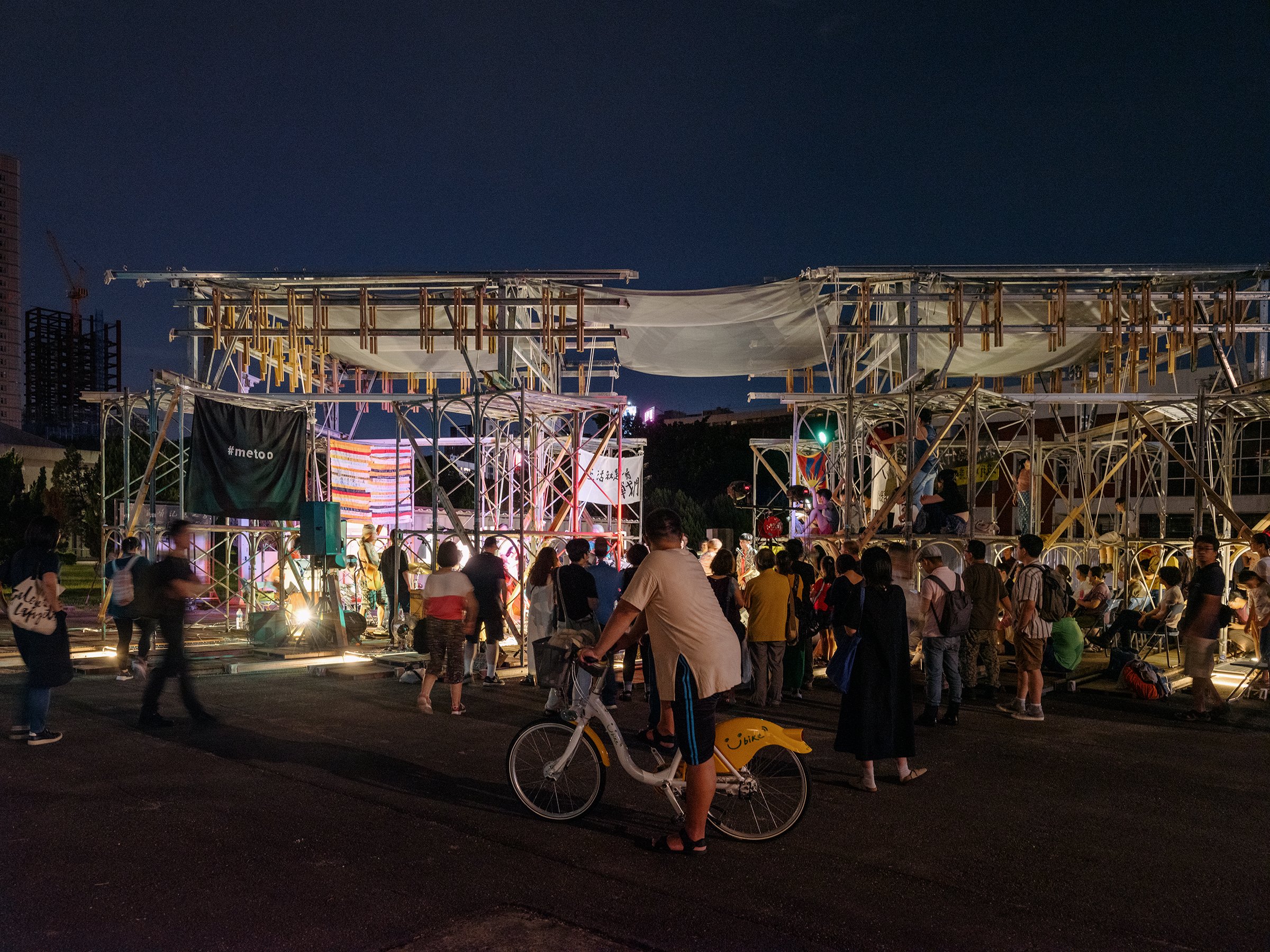
This project celebrates a more inclusive way of making architecture. By opening the construction process to everyone—regardless of their background—we turned "labor" into a joyous, collective creative act. This experience proves that when we build together, we do more than just raise a structure; we empower the public to see themselves as the true authors of their city, evolving from spectators into the active producers and curators of their own community life.



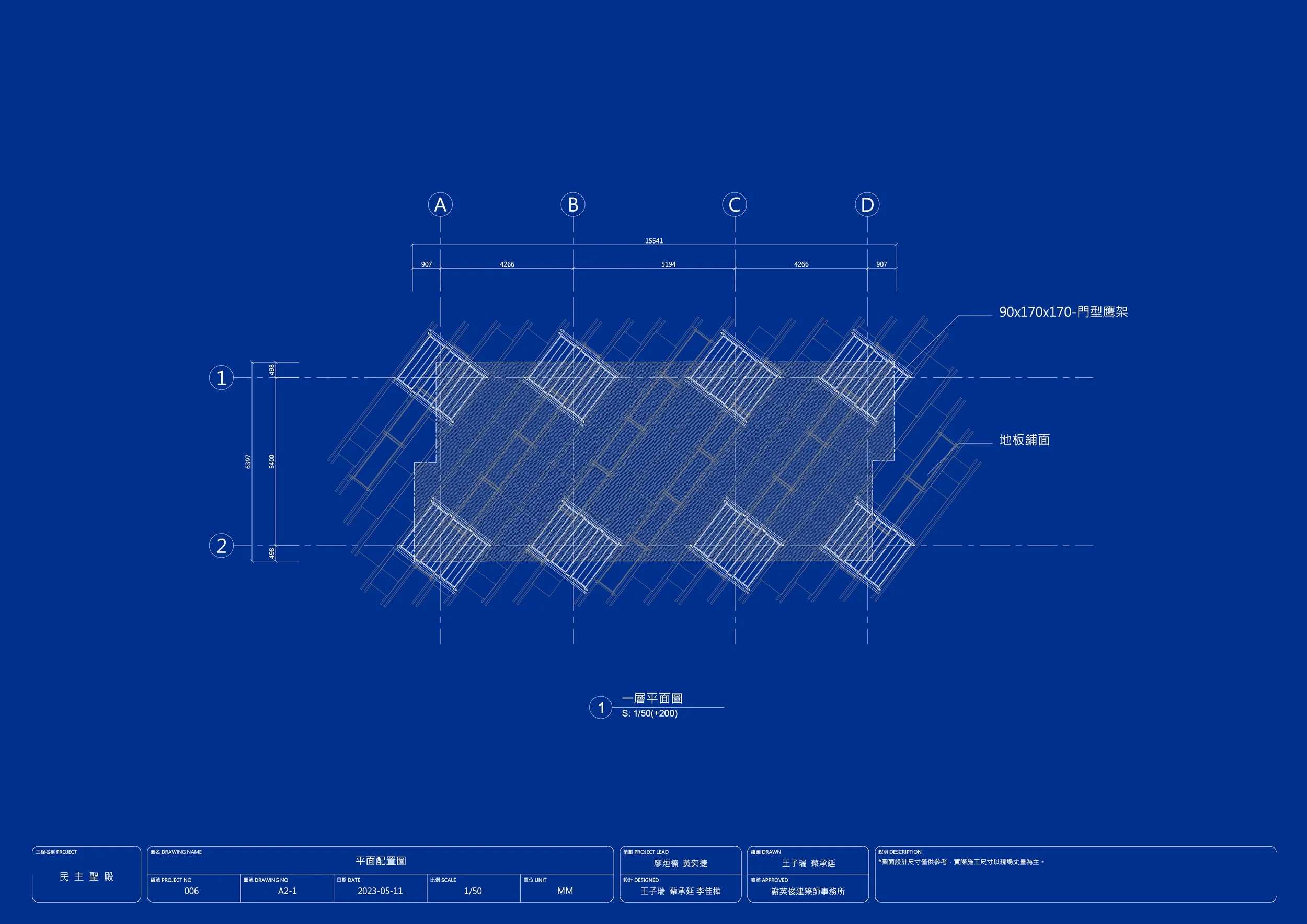
Democratizing Construction: Single-Line Drawings
Departing from standard architectural conventions, the construction set for the pavilion was developed using a "single-line" drafting method. By stripping away technical complexity, these drawings were designed to be intuitive, lowering the barrier for non-professionals to interpret the plans and participate in both construction and deconstruction.